The case for complete conveyor sealing in dust control
By Richwood
In the mining and aggregate industries, dust control is not just a matter of regulatory compliance, it’s a critical factor in operational efficiency, equipment longevity, and worker safety. Whether moving potash, coal, or crushed rock, transfer points on conveyors are often the biggest contributors to fugitive dust on site.
As more operations look for sustainable, low-maintenance solutions, the focus is shifting away from active dust suppression methods like water sprays or collection systems toward passive dust control. This approach aims to contain dust at the source through smarter engineering and better system integration. The key? A fully sealed conveyor transfer point that begins with proper transfer chute design and ends with effective belt sealing without relying on chemicals or mechanical filtration.
Passive dust control is based on the principle of managing airflow and material movement within a sealed environment. Instead of capturing airborne dust after it’s been generated, this method prevents dust from escaping in the first place. And in sectors like coal and potash, where dust can be combustible, corrosive, or extremely fine, preventing release at the source is not only safer but also more cost-effective in the long term.
Dust generation often starts in the transfer chute. Poorly designed or undersized chutes create turbulence, unpredictable material flow, and uncontrolled impact forces. These conditions pulverize material, bounce fines into the air, and increase wear throughout the system.
A properly engineered transfer chute must be tailored to the application. By controlling the trajectory and energy of the falling material, properly designed chutes reduce both spillage and airborne particles from the outset.
Too often, discussions about dust control jump straight to sealing components like skirting or curtains. But those solutions can only be effective if the conveyor belt itself is properly supported. If the belt is sagging between idlers or has any vertical movement while being loaded, efforts to seal fines and dust will typically fail.
In fact, trying to seal against a moving unstable belt creates gaps and pressure inconsistencies that actively promote dust escape. Proper belt support is fundamental. This is usually best accomplished using engineered impact beds or cradles. It provides a stable consistent surface that allows sealing components to function as designed. Without it, every other dust control measure is compromised.
The five pillars of passive dust containment
A high-performance passive dust control system integrates several interdependent components. These include:
- Controlled material flow
The geometry of the transfer chute should guide material smoothly and centrally onto the belt, minimizing bounce and degradation that leads to fine dust creation. - Energy dissipation and belt support
Engineered belt support systems—like impact saddles or idlers—absorb the shock of material drop, protect belt integrity, and ensure the belt remains flat and steady, enabling effective sealing. - Full transfer enclosure
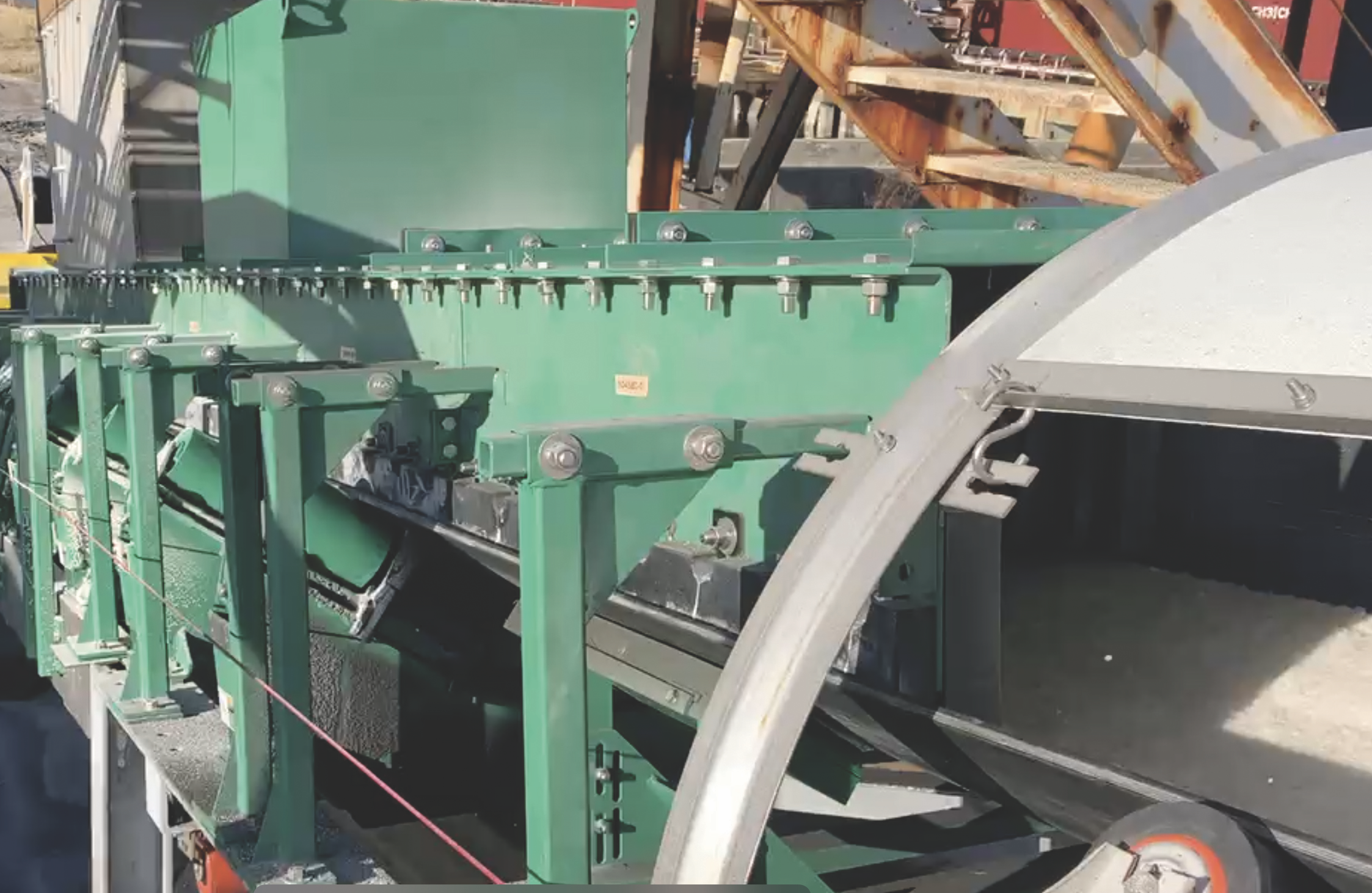
Effective containment requires more than just basic skirting. It demands a sealed system—including rugged wear liners, properly design skirting, skirtboards, and proper sealing rubber—to prevent escape paths for dust-laden air. - Air velocity reduction
Turbulent air is one of the primary causes of dust becoming airborne. Passive systems use baffled stilling zones and dust curtains to slow air movement, allowing fine particles to settle back onto the belt. - Pressure equalization
A sealed enclosure must allow for pressure relief to prevent sudden air bursts that force dust out. Passive systems incorporate venting, chimneys, and extended containment zones based on CEMA 575 principles, allowing dust to settle naturally without needing active suppression.
Across North America and globally, mining operations are proving the value of this passive approach. Companies like Richwood have delivered complete transfer point solutions that significantly reduce dust without water, filters, or moving parts.
In one coal facility example, implementing a full Richwood passive dust system reduced visible dust emissions to near-zero while cutting cleanup time and improving conveyor belt life. In potash handling, systems have maintained long-term performance in highly corrosive, fine dust environments. And in aggregates, they’ve proven successful under heavy impact from high-tonnage loads, reducing spillage and airborne particulate.
In addition to improved worker safety and actual system performance, passive dust control is far less maintenance intensive than active dust control methods like misting systems or baghouses. Its long-term impact on safety, production, and worker morale is significant.
About Richwood
Richwood engineers complete conveyor solutions for the mining and bulk material handling industries, specializing in dust containment, impact protection, and belt support. With almost 50 years of field experience, Richwood products are trusted worldwide for durability and performance. Learn more at www.richwood.com.